
The XV Anniversary Republican Festival of National Cultures was held in Grodno
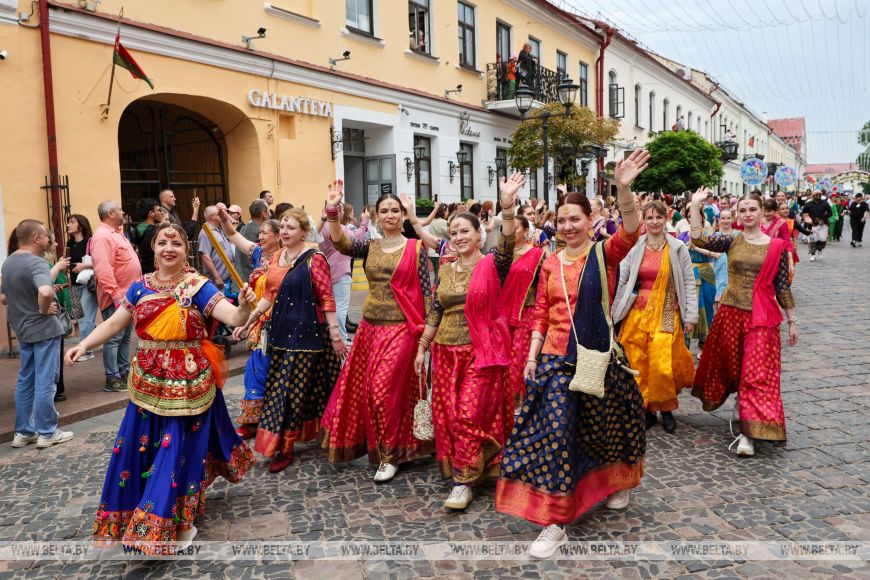
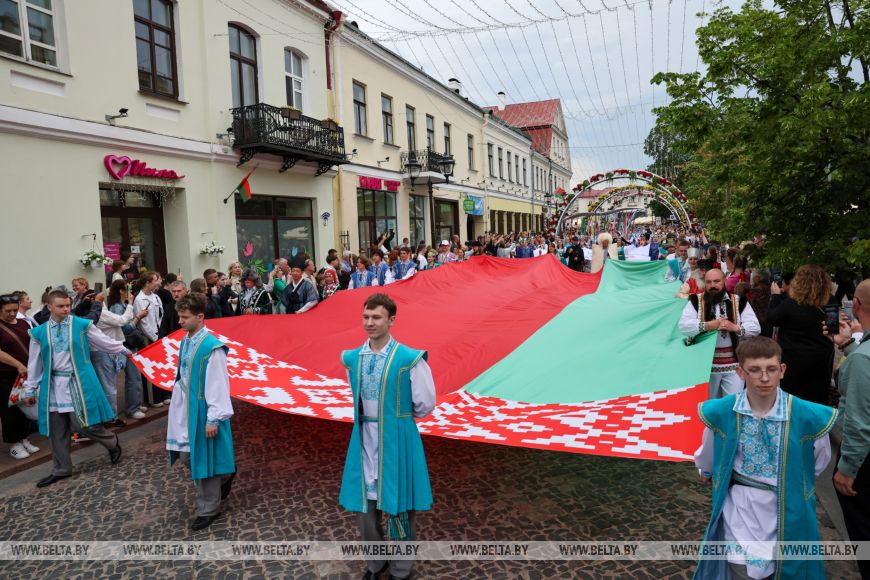
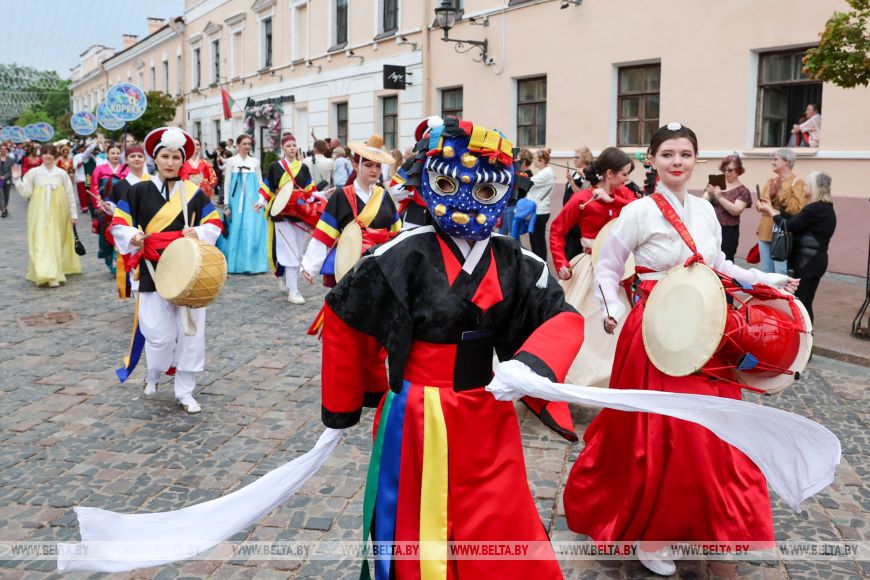
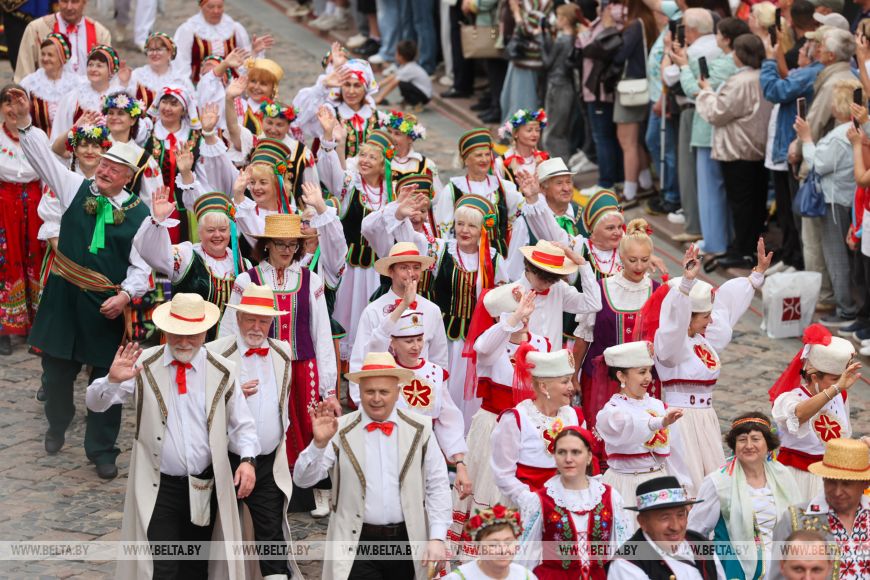
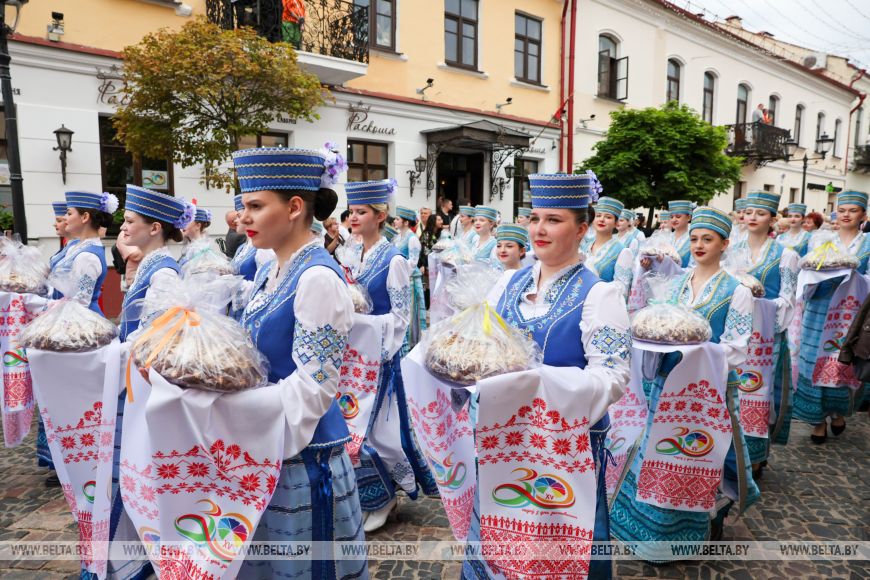
On June 5-6, 2026, the XV Festival of National Cultures took place in the center of Grodno. For three decades, this celebration has become a symbol of unity and mutual understanding, bringing people together through art, traditions, and history.
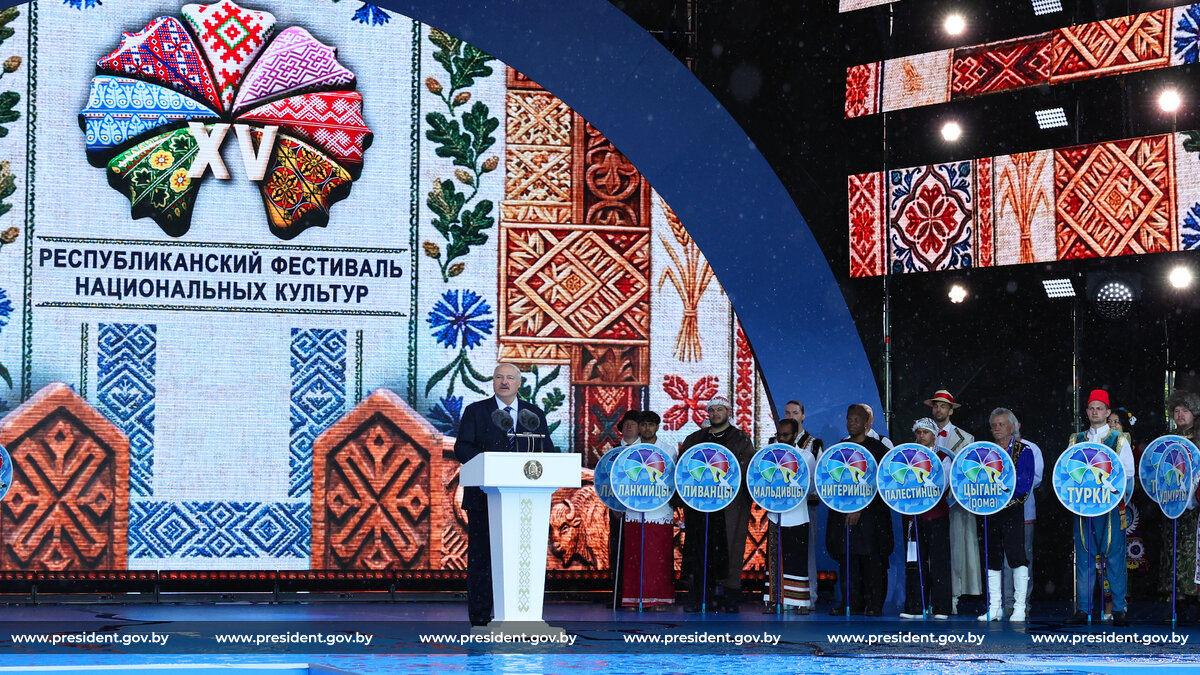
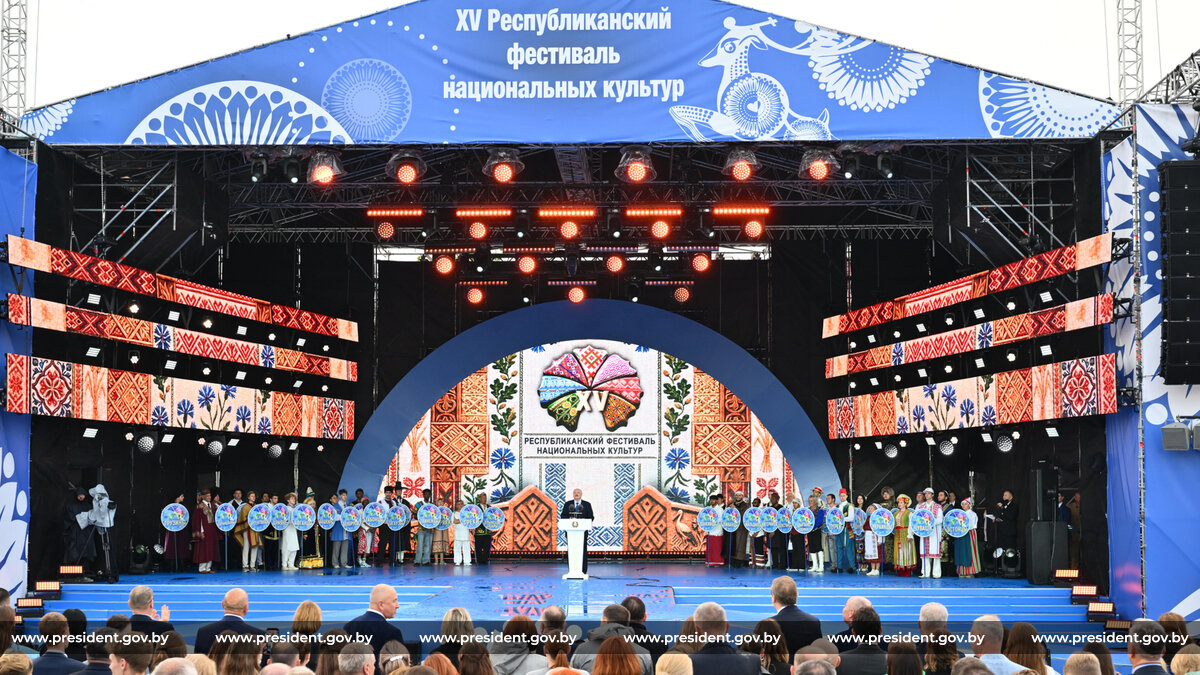
The President of the Republic of Belarus, Alexander Lukashenko, took part in the official opening ceremony of the festival on June 5.
The head of state addressed the festival participants and the numerous guests of the city on the Neman River.
First of all, Alexander Lukashenko commented on the weather, which did not prevent the celebration from taking place. The fact is that on the day of the festival it rained intermittently.
"If you are going to blame anyone for this, blame me. I told the governor. I thought, I will come to the Grodno region after Mogilev, Gomel, Brest, Vitebsk – what should I give them? You can't come without gifts. A hospital is good. But I once heard the Brest governor complaining that you hadn't had rain for a long time. I called him yesterday: give the people of Grodno some rain so that I can arrive with a gift," Alexander Lukashenko said.
"Flying over the southern part of the Grodno region, I can give you good news – there are lakes everywhere. On the fields – lakes – terrible downpours have passed. You asked – I did it," the head of state noted. "What is happening today is, as the peasants say, our gold. As much rain as falls, that much harvest of grain you will get."
The downpour that started at the very beginning of the President's speech stopped just a few minutes later, and the sky cleared. "The Lord heard us. As I was driving here, I was thinking that at least there should be no rain during this time. It wetted us a little, tested us. And look what a beautiful sky. That means we are not entirely sinful. We have not sinned so much that God does not love us," Alexander Lukashenko noted.
Addressing the guests and participants of the festival, the head of state admitted that he had long wanted to visit this celebration in Grodno. "We have the 'Slavianski Bazaar', we have 'Alexandria', the creative intelligentsia meets in Brest... But there is no such unique festival anywhere else," he noted. "And it is very good (we guessed correctly here) that this festival takes place in the beautiful western center of Belarus – in Grodno. Good, decent people live here, who approach everyone with an open heart."
"The idea of the celebration reflects the rich history of our native land. This land is located at the crossroads of trade routes, where entire civilizations met (and clashed), where peoples and religions met, where our national mentality was formed. It is openness, hospitality, the ability to work together, to be friends, the readiness to welcome into your home everyone who comes with peace and goodness," Alexander Lukashenko emphasized.
"People have reached out to us – we must not push them away. We must show our openness. If we are proud of our mentality and hospitality, we must show that hospitality. Everyone should feel good living in our Belarus. That is our future," the Belarusian leader is convinced.
The President noted that the Festival of National Cultures was created as a tradition of sovereign Belarus. In this regard, he spoke about the importance of traditions for the sovereignty and independence of the state: "I often say: if you want to be sovereign and independent, you must have your own traditions. This is one of the traditions that we created."
This year's celebration is an anniversary and is dedicated to the 30-year history and traditions of the forum. The President noted that representatives of 11 nationalities took part in the very first Festival of National Cultures, and now there are more than 40.
"Over this time, from a modest regional event, the forum has turned into a cultural event whose fame has spread beyond the country. And its capital, Grodno, has become a true Mecca for thousands of tourists, including those from European states," Alexander Lukashenko stated. "And these people are not hindered by three-meter fences erected by our western neighbors, nor by the next 'iron curtains' with which they scare us. We are not imposing ourselves, but we remain ready for a civilized dialogue in the interests of our peoples."
Addressing representatives of national associations, the head of state expressed gratitude for diplomatic initiatives, emphasizing the importance of people's diplomacy in developing relations with other countries.
"Belarus maintains friendship with many countries, and you help us. You are true people's diplomacy. The fact that you speak well of Belarus is beneficial to us. We understand that this is not charity," said Alexander Lukashenko. "Behind each of your words are actions. Your word is worth a lot. That is people's diplomacy, thank you for that. When cultural, popular, family diplomacy binds people together, we politicians are powerless to break it."
"Moreover, international families (and I am an ardent supporter of this) are a common occurrence in Belarus. They give birth to wonderful, beautiful, smart children who speak many languages of our planet," Alexander Lukashenko added.
The President also noted that 37,000 foreign students are studying at Belarusian universities. "It is especially gratifying when talented people stay and achieve professional success in a variety of fields. When visiting educational institutions and healthcare facilities, I see there not only our Azerbaijanis, Armenians, Ukrainians, or Russians. There are people from the Near and Far East, from Africa. People who, having received their education here, have stayed with us. And they are good specialists. We welcome this," he said.
"And most importantly – all of us should be and are united by the memory of the great feat of the Soviet people. Had it not been for that, we would not be here either. A huge number – thousands and hundreds of thousands – of residents of Grodno perished in that war. Sometimes they perished for nothing. That is why we must cherish peace," Alexander Lukashenko emphasized. "We Belarusians remember representatives of all nationalities (and there were more than 70 of them) who fought at the front, in partisan detachments, or in the underground, liberating our Belarus."
The head of the Belarusian state assured that Belarus will do everything for peace and called war a disaster. "War will never give us the opportunity to gather as we do today. We do not need war. We can only win (and we will definitely win) in peace, in peaceful labor," the President emphasized.
"The main thing I want to tell you: if someone tries to impose on you the idea that we are warriors, not peaceful people – do not believe it. We are not going to fight anyone – only friendship," Alexander Lukashenko declared. "We do not aim to fight – we want to be peaceful people, we want to live in peace. I want this to be firmly understood in the west of Belarus, in Grodno: we want peace, we bring peace to the peoples. We are no aggressors or co-aggressors."
At the festival's opening ceremony, the President called on those living in Belarus to take care of their flourishing land.
"Some three to five years ago, the Polish leadership told us about Poles. I clearly told them: yes, Poles live among us, but they are my Poles. You are all ours, you are Belarusians. Take care of your land. This land is no longer for us, the older generation. It is for children and grandchildren. We must preserve and enhance this flourishing land," Alexander Lukashenko stated.
The head of state also spoke about the role of culture, which is international and cannot be confined within the borders of one country. "Culture and science are international. You cannot confine a culture within the framework of one or two states. Culture is one, and within this culture there are many different branches and directions. Because it is, as I said, international," Alexander Lukashenko emphasized. "It is not limited to the framework of a festival. A festival is the soul of culture, the norm of our life. I am pleased to see you passionate about this idea. The idea is important, but especially significant is the work of the people thanks to whom it becomes a carefully preserved and certainly good tradition."
The head of state thanked all those who ensure the holding of this celebration and develop the unique festival. "A huge thank you to our organizers, the governor, the authorities of the Grodno region, the participants, and the caring people who create the atmosphere of friendship and respect for different cultures that we are all proud of," he said.
The President congratulated the participants and guests on the holding of the Festival of National Cultures, wishing prosperity to this celebration and to all of Grodno. Alexander Lukashenko recalled that in the nineties he began his election campaign precisely in this regional center. "I remember (I promised you that I will remember this sacredly) when you renounced your so‑called candidates and supported me, then a young man, in those elections, voting for me. Everything you asked of me, I have done. I will do even more," the Belarusian leader assured.
The head of state was presented with a festive loaf of bread and the crystal symbol of the Festival of National Cultures as a sign of gratitude for preserving peace and friendship on Belarusian soil. "See, I did not come in vain. Fresh bread and a beautiful gift for the Palace of Independence. Thank you, residents of Grodno!" the President thanked.
This year, the celebration was dedicated to the 30-year history and traditions of the festival, which has been held every two years since 1996.
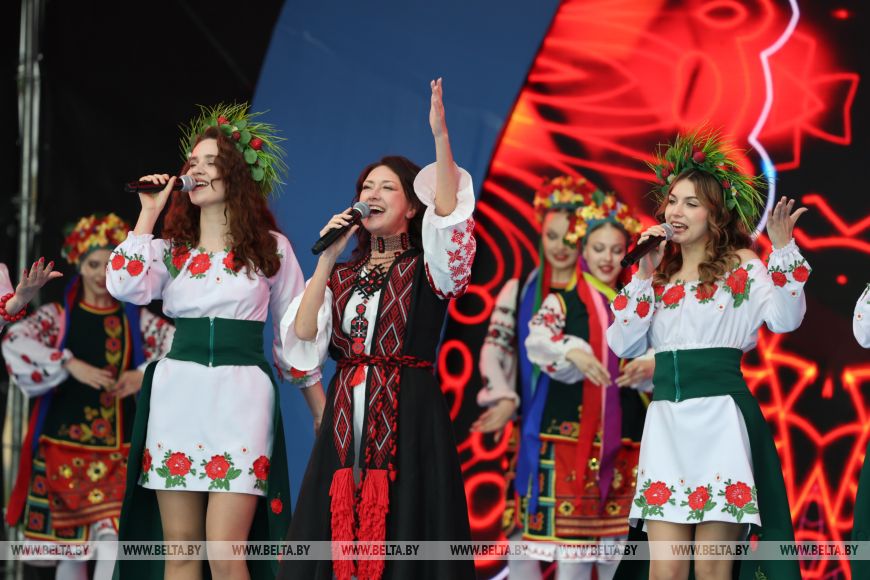
More than 800 representatives of 42 nationalities took part in the anniversary forum.
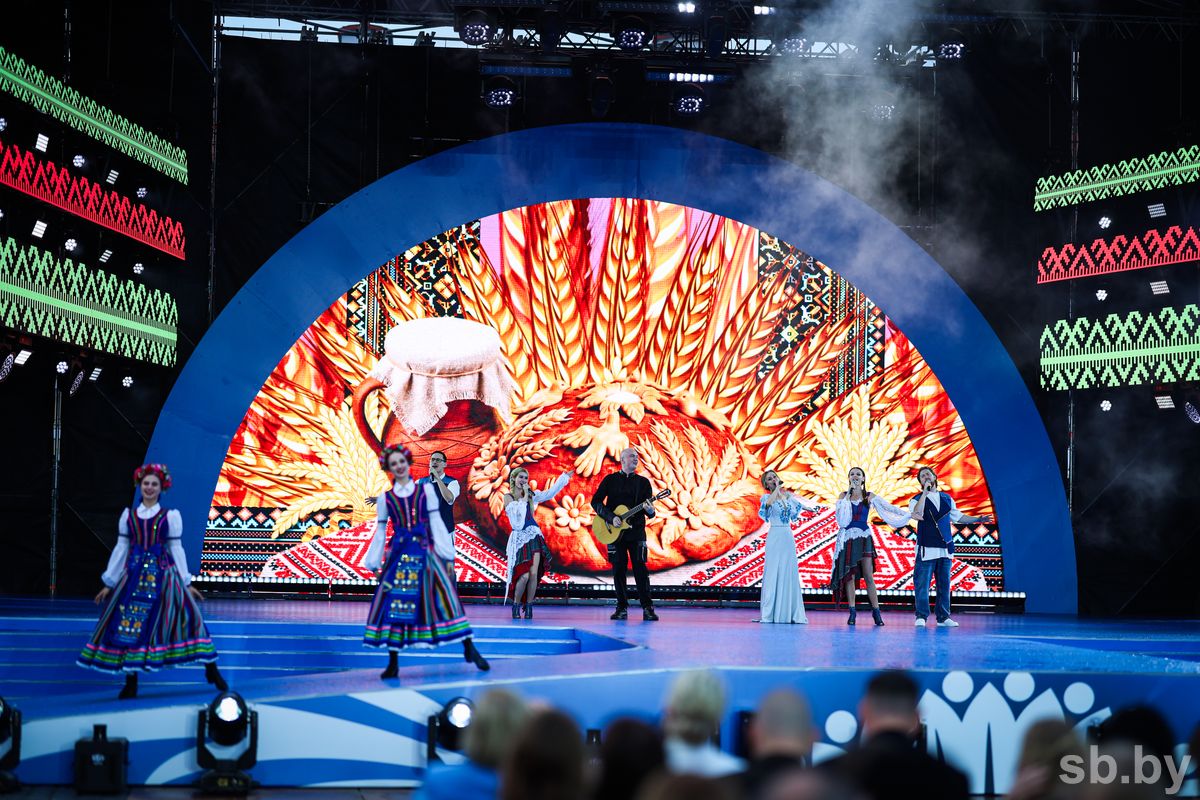
The festival program included more than 100 events, which took place on June 5 and 6 in the historic center of Grodno, and on June 7 on the Augustow Canal.
The concept of this year's festival is "Festival of Festivals." Participants introduced guests to the national holidays of their peoples.